
Choosing between the different types of commercial dishwashers comes down to what happens during service. How many racks build up after the lunch rush? Where do dirty plates go when they leave the dining room? The answer also depends on what you’re washing, how quickly it needs to return to service and how staff move through the wash area.
If you’re looking for a commercial dishwasher, Rhima can match the right system to your ware, volume and workflow, backed by Australian experience since 1990.
The Main Types of Commercial Dishwashers
Underbench Commercial Dishwashers
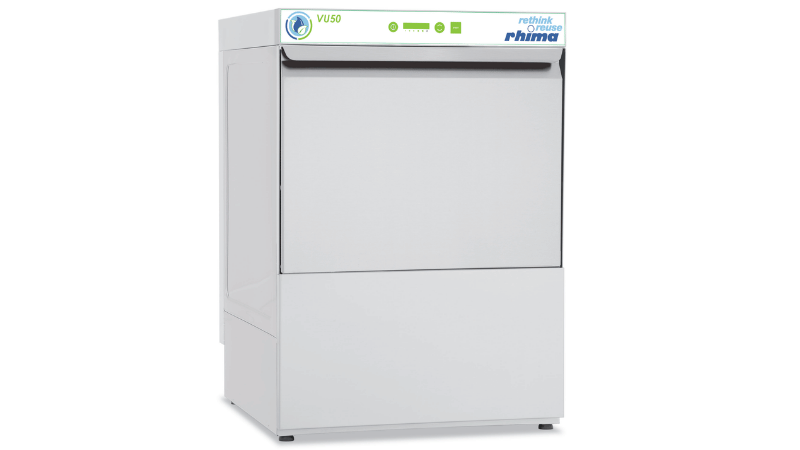
An underbench commercial dishwasher is a compact, front-loading machine that fits beneath or alongside a commercial bench. It’s a practical option for cafés, bars and smaller restaurants where floor space is tight.
A typical cycle can take around two minutes. In day-to-day use, an underbench machine may process roughly 15 to 20 racks an hour once loading and unloading are included. The VU-50 dishwasher is a great example. It uses a 500 x 500 mm rack for mixed ware such as plates, cups, glasses and cutlery.
Commercial Glasswashers
If most of the wash load is glassware, a commercial glasswasher can make the process easier to control. Bars, cafés and other beverage-heavy venues often need gentle handling, suitable racks and a finish that doesn’t create extra polishing work.
The VU-40 underbench glasswasher is designed for glassware, cups, saucers and light lunch plates, using a 14″ x 17″ rack.
Hood Type & Pass Through Dishwashers
A hood type dishwasher uses a rack positioned at bench height. The operator slides the rack into place, lowers the hood for the wash cycle and raises it when the cycle finishes.
The same configuration is commonly called a pass-through dishwasher because the rack can move from the dirty side of the wash area, through the machine and onto the clean side. The RH-60 pass through dishwasher is one example of this layout.
This setup suits busier kitchens where racks need to keep moving. One rack can be prepared while another is washing, and a well-planned bench layout can keep dirty returns away from clean plates waiting to go back into service.
Conveyor Dishwashers
Rack Conveyor Dishwashers
A rack conveyor dishwasher is designed for a steady, high volume of ware. Loaded racks move through the washing stages continuously, so staff don’t need to start a separate cycle for every rack.
The RR rack conveyor range uses 500 x 500 mm racks and can be configured with pre-sorting tables and conveyors. This format suits larger operations where ware arrives in a constant stream.
Flight-Type Dishwashers
Flight-type dishwashers sit at the high-throughput end of commercial warewashing. Items are placed directly onto a moving conveyor and travel through the wash process continuously, making them suited to very large volumes.
Commercial Dishwasher Types Compared
| Commercial Dishwasher Type | How It Works | Typical Fit | Key Workflow Consideration |
|---|---|---|---|
| Underbench Commercial Dishwasher | Front-loading batch machine | Cafes, bars and smaller restaurants | Works well where space is tight and rack volumes are manageable |
| Commercial Glasswasher | Glass-focused rack washing | Bars, cafes and beverage-heavy venues | Useful when glassware dominates the wash load |
| Hood Type / Pass Through Dishwasher | A hood lowers over a rack positioned at bench height | Busy commercial kitchens | Supports bench-height loading and dirty-to-clean flow |
| Rack Conveyor Dishwasher | Loaded racks move continuously through wash stages | Large restaurants, hotels and institutional kitchens | Suited to a steady stream of ware and higher throughput |
| Flight-Type Dishwasher | Ware travels directly on a moving conveyor | Very high-volume foodservice operations | Continuous handling of very large ware volumes |
How to Choose the Right Commercial Dishwasher
- Start With Your Peak Washing Volume
Daily totals can hide the pressure points. A kitchen can still struggle when dozens of racks arrive within a short lunch or dinner peak. Understanding rack capacities gives you a starting point. Real throughput also depends on scraping plates, loading racks, unloading clean ware and the gaps between cycles. Work from the busiest part of service and follow what actually happens to each rack. - Plan the Wash Area Around Real Kitchen Workflow
Allow space for scraping, sorting, loading and unloading. Follow the rack from the dirty return area through to clean storage. Pass through systems work well where benches create a clear dirty-to-clean direction. - Match the Machine to What You’re Washing
Plates, glasses, trays, cutlery and kitchen utensils place different demands on a wash system. A bar washing glassware throughout the evening has a different workload from a restaurant receiving mixed plates, bowls and trays at the end of a sitting. - Think About Labour and Rack Handling
As volume increases, moving racks becomes part of the equipment decision. Pass through machines and continuous conveyor systems can keep ware moving when repeated batch cycles begin to slow the wash area.
Why Choose Rhima?
- Australian-owned experience: Rhima has worked in the Australian market since 1990.
- System selection based on the job: Ware, peak throughput, footprint, staff movement and dirty-to-clean workflow are considered before a machine is specified.
- Range for different volumes: Underbench and glasswashing machines through to hood type, rack conveyor and flight-type systems.
- Support through the equipment lifecycle: Specification, commissioning, operator training, preventative maintenance and ongoing service.
- Washing-process expertise: Rhima considers contact time, chemistry, temperature and mechanical action when assessing cleaning performance.
Choose a Commercial Dishwasher With Rhima
The right commercial dishwasher needs to fit the ware, peak throughput, available space and staff movement. We can assess those details with you and help plan the surrounding workflow.
Rhima supports commercial washing equipment from specification through commissioning, operator training, preventative maintenance and ongoing service. Explore our commercial dishwasher solutions or speak with our team about the wash requirements in your kitchen.
Frequently Asked Questions
What Size Commercial Dishwasher Does My Kitchen Need?
Start with the racks you need to process during your busiest period, then consider the space and staff available to load and unload them. Sharp peaks can make higher throughput necessary even in a small kitchen.
Can a Commercial Dishwasher Wash Glassware?
Yes, when the machine, rack, wash action and chemistry suit the glassware. Venues with a glass-heavy workload may get a more practical result from a dedicated glasswasher or a machine configured for glass washing.
When Should You Move to a Conveyor Dishwasher?
Consider a conveyor dishwasher when dirty ware arrives continuously and individual batch cycles are slowing the wash area. Rack conveyor and flight-type systems suit different volumes and handling methods, so account for the whole route from dirty return to clean storage.